Monday, 5 May 2014

DVD Review: Sisters (Arrow Video)


Released in 1973, Brian De Palma's 'Sisters' remains one of his most deliciously voyeuristic outings, beginning with a nod do the title of Michael Powell's controversial film with a TV show named 'Peeping Toms'. The premise is setting up unwitting members of the public in a similar way to 'Candid Camera': in this case, the audience watch the victim watching an apparently blind woman getting undressed to see if he stays the course, or does the right thing and bales out early. Philip Woode (Lisle Wilson)shows chivalry is not entirely dead and exits stage left, going on to start a relationship with Danielle Breton (Margot Kidder); a French Canadian in New York who appears to be a sweet natured beauty with perfect sight. Danielle, however, comes with some rather sinister family baggage: ex-husband Emil (William Finley) is stalking her, and the suggested presence of her Siamese twin Dominique threatens to call time on her sisters new relationship.


'Sisters' has often been accused of being little more than a film full of Hitchcock riffs - a fate shared by other De Palma films. While it's true that 'Sisters' contains nods to 'Psycho', 'Rear Window' and 'Vertigo' amongst others, it successfully builds on visual and thematic links to emerge as a strong film in its own right. The concept of sitting in the dark watching people on a big screen is voyeuristic in itself, but here we have Grace Collier (Jennifer Salt) watching a murder victim smear a blood message on the window opposite just before he dies, and teaming up with private detective Joseph Leach (Charles Durning) when the police refuse to believe a murder took place.


An uneasy sense of being privy to murder and madness in the lives of others is heightened by De Palma's use of split screen, providing additional information to scenes we'd maybe rather not witness but are utterly compelled to watch. The idea of Siamese twins containing a fiercely dominant personality in which darkness edges out the light works wonderfully well here, due in large part to Margot Kidder who turns in some of her very best work in this film. 'Sisters' is certainly not for the faint-hearted, with its bloody murder scenes, brilliant, deeply unsettling set-pieces and rousing Bernard Herrmann score, but it's one of De Palma's finest films and will doubtless win new admirers with Arrow Video's dual-format release.


I received the DVD part of the package (due to a Royal Mail foul-up), and can report that Arrow's presentation is the best I've seen of this film to date, with robust colours,a nice level of detail and grain in the appropriate areas.
Once again, Arrow have done us proud with regard to supplementary material, beginning with 'What The Devil Hath Joined Together: A Visual Essay'. This is a 45 minute feature where Justin Humphreys traces production history, and explores the themes of 'Sisters'. As well as the Hitchcock connection, Justin also highlights the influences of other directors, and goes into the De Palma/Herrmann relationship which yields quite a surprise.


Next on the agenda are cast and crew interviews, which run for over 45 minutes. First up is Jennifer Salt who recalls the roles of Grace and the twins were Christmas presents from De Palma to Kidder and herself. Salt goes on to recall the shoot, including a frenetic last day of filming which turned out to be quite literally a 24 hour shoot.
Louisa Rose, wo co-wrote the script, is next up. Rose charts her beginnings as a writer; her approach to her craft, goes on to declare there was no inspiration drawn from Hitchcock on her part, and remarks she found it interesting to write a script featuring a different kind of killer to the norm.
Paul Hirsch served as editor on 'Sisters', and reveals his first job (De Palmas' 'Hi Mom!')was gained through nepotism. He was actually hired fairly late in the day for 'Sisters', and can lay claim to being the one who suggested his director enlist the services of Bernard Herrmann. Hirsch also explains just why voyeurism is a central part of many of the director's films.
Jeffrey Hayes was the unit manager on 'Sisters' which became his debut feature, and recalls various aspects of the shoot, together with his work on De Palma's 'Phantom Of The Paradise'. Lastly, an excerpt from an audio interview with William Finley is included here, mentioning his early days; his friendship with De Palma and his character in 'Sisters'. All the video interviews were recorded and edited by the High Rising Productions team of Calum Waddell and Naomi Holwill, and provide illuminating additions to this package.


'The Brian De Palma Digest' is a 29 minute excursion through Brian De Palma's CV, written and narrated by film critic Mike Sutton, who reveals 'Dionysus In 69' marked De Palma's first use of split-screen photography. Mike's appraisal of a fine body of work contains great insight, and is absolutely guaranteed to compel you to revisit old favourites and to seek out any titles you have yet to see. A theatrical trailer and gallery of poster designs round things off nicely. Arrow have also included a booklet containing a quartet of essays. The fist is 'The Reflecting Eye:Seeing Double in Brian De Palma's Sisters' by Kier-La Janisse. This beautifully written essay traces De Palma's film back to his earlier output and addresses its psychiatric and medical concerns, acting as a thorough overview of the key onscreen events. 'The Making Of Sisters: An Interview With Brain De Palma' is a reprint of a 1973 De Palma interview with 'Filmmaker's Newsletter', where De Palma discusses technical aspects of the production, including split-screen, his aim in making 'Sisters', the budget and other aspects of the shoot.
'Murder By Moog: Scoring The Chill' is a De Palma article that originally appeared in 'Village Voice on 11th October 1973. Here, De Palma explains how his editor jolted him by adding cues from 'Psycho' to the soundtrack and suggesting Herrmann should be approached to score the film. De Palma has some fascinating stories to impart regarding Herrmann, making this an immensely satisfying read.
'Rare Study Of Siamese Twins In Soviet' is reproduced from an article in 'Life' magazine, dated back to 1966. This tells the story of Masha and Dasha, the Siamese twins that inspired De Palma to make 'Sisters'.

This informative booklet ends with a few words about the transfer. Read the whole thing after you have viewed the film, and then watch the film again with increased understanding and appreciation.

'Sisters' is available to buy now, and is highly recommended as a solid purchase of a film that continues to haunt the mind some four decades on.

Friday, 2 May 2014

The Legend Of Hell House


"May you find the answer that you seek. It is here, I promise" Emeric Belasco.

Welcome to Hell House. The "Mount Everest of haunted houses" according to Dr. Barrett ( Clive Revill), who accepts a challenge from businessman Rudolph Deutsch ( Ronald Culver) to produce evidence of survival after death. Accompanied by his wife Ann (Gayle Hunnicutt), and mediums Florence Tanner (Pamela Franklin) and Ben Fischer (Roddy McDowall), Barrett's party enter the house on 20th December, intending to remain there for 5 days and collect £100,000 for a positive result.

I suppose it's entirely reasonable to compare The Legend Of Hell House to what could be termed the 'Mount Everest' of haunted house movies: I refer, of course, to Robert Wise's The Haunting. Both films pitch their audience into a house allegedly alive with psychic phenomena, where a team of investigators will attempt to deliver irrefutable proof that the spirits of the dead are often unwilling to depart from the land of the living.

For me, the most fascinating similarity between the two films is that neither Hell House nor Hill House provide the aforementioned evidence. In short, the various events that take place may well have been unwittingly (The Haunting) or intentionally (Hell House) caused by the living, rather than the dead.
We'll take a look at The Haunting some time soon, but let's concentrate on the house owned by Emeric Belasco which, years earlier, played host to vampirism, sadism, necrophilia, drug addicition, orgies and other unsavoury activities. In 1927, just 8 years after the house was built, Belasco disappeared without trace and Hell House was boarded up for over 20 years, with its master missing presumed dead. During two attempts to discover whether Belasco really was responsible for the reported ghostly manifestations, eight people died: on both occasions, Ben Fischer was the only person to emerge in one piece.

As the film progresses, Dr. Barrett's expedition appears to encounter a barrage of supernatural phenomena, including a ferocious assault where the good Doctor has practically everything bar the kitchen sink thrown at him, and a spine tingling seance that really sets the nerves on edge when Florence begins to speak with a gruff male voice apparently belonging to Belasco's son, Victor. Later in the film, Florence is attacked by a supposedly possessed cat and allows Victor's spirit to have sex with her, while Dr. Barrett's wife - also seemingly possessed - invites Ben to get down and extremely dirty with her.
As with The Haunting, there are some very strong human emotions gathered together here: fear, sexual repression, rage, jealousy.....enough to move mountains, never mind a few tables and sundry household appliances. The sexual angle is particularly interesting. Ann Barrett, who clearly suggests her husband is no longer interested in what lies beneath ("He's sleeping"); Florence, who likely experiences a wet fevered dream in lieu of her first (?) sexual encounter, with scratch marks from Victor's alleged violation probably caused by the feline from hell, and what about Ben? The only person to walk out in one piece from two previous investigations! In both cases, practically every male participant had their legs crushed in some form of 'accident', and either died or suffered permanent paralysis. Did Ben harbour some dark secret that turned his mind against both sexes? Was this self-confessed 'physical' medium compelled to use psychokinisis to kick up a real storm directed at his temporary companions, and were his powers sufficient to cause Florence to hallucinate,and to bring Ann's sexual urges to the surface? To put it bluntly, if Fischer couldn't get laid he'd make darn sure no-one else would. Dr. Barrett clearly believed his own brand of science - including a machine designed to 'drain' the house - succeeded in clearing almost every room, but maybe Hell House had always been devoid of energy.....until Fischer walked through the door. First-time viewers will have to see for themselves whether he makes it back to the outside world for the third time, or perishes during a showdown in the chapel - the nerve centre of Hell House, or so Fischer would have us believe

Whether or not the Belasco place really was haunted is very much open to interpretation, but even the sternest disbeliever will surely agree that John Hough's direction realises many flesh-crawling moments, with every shadow, each creaking door bringing an icy chill that seems to reach out beyond the screen. Even the presence of one wholly inappropriate line, uttered during an ectoplasm display at the seance, ("Leave a specimen in the jar, please") fails to dispel the tension for more than a few seconds.

20th Century Fox's Region 2 DVD delivers the best looking small screen version of this film, with a nice 1.85:1 transfer revealing that Hough and his team used every inch of the screen to explore the nooks and crannies of Hell House, turning damn near every room into a snapshot from some gothic hell. While this film retains its 70s look - due, no doubt, to the filmstock - colour reproduction is good and shadow detail is well rendered, making the £5.99 price tag for this disc seem like daylight robbery; in our favour for once.On a performance level, it's pretty much 'as you were' with McDowall and Franklin both excellent, Hunnicutt remaining an attractive piece of window dressing and Revill still struggling after all these years to draw any feelings of dislike or concern from either side of the camera.
While The Legend Of Hell House was never quite good enough to enter the upper echelon of classic spookers, it does remain a fascinating film; possibly for what it may be, rather than what is has long been perceived as.

Monday, 21 April 2014

Blu-ray Review: That Sinking Feeling


Bill Forsyth's 1980 film actually made the Guinness Book Of Recordsas the lowest budget for a feature film - when adjusted for inflation - weighing in at just under £5,000.
'That Sinking Feeling' is set in Glasgow, back in the days when a coffee and burger would set you back 45p, Ronnie Munro (Robert Buchanan)is a keen supporter of unhealthy eating, being one of the city's downtrodden youth, short on cash and hope.
Suicide with cornflakes and milk is just one example of the gallows humour shared by Ronnie and his band of merry men, who are all looking for a way out of their humdrum existence. During one of his aimless walks through the city, Ronnie sees the answer to his prayers: a shop window display featuring a kitchen sink priced at £60. Suddenly, Ronnie's entreprenurial spirit kicks in, and he summons a meeting with his pals, eager to unveil an exciting business opportunity.'There's brass in steel' is the message here, with the local warehouse and its stock of kitchen sinks being the object of Ronnie's attention.
Soon, plans are laid, confederates are briefed and discreet meetings take place, including a hilarious conference on a boat in the middle of a lake!
Taken at face value, Ronnie's accomplices are a motley crew indeed, with young children enlisted to participate in this crime of the century and often possessing more savvy than their peers. Still, the plan - which includes drugging the driver of a firm's van to be used as a storage and getaway van - doess indeed get them into the factory where the lecherous night watchman prances and dances with two cross-dressing members of the Munro firm.
'That Sinking Feeling' certainly scores highly in terms of comedic value, but its concern regarding the plight of the disenfranchised adds a nice balance and the film works beautifully as a result.

The BFI's 'Flipside' series has restored some real gems to our screens, so it's particularly pleasing to report that Bill's film is now the subject of a fully loaded dual format Blu-ray/DVD release on this enterprising label.

Picture quality was never going to be pristine, given the ultra low budget shoot, but it's a huge improvement on the previous release and is sure to please fans of this film. 'That Sinking Feeling' is presented in its original aspect ratio of 1.33:1, with digital restoration tools used to reduce film defects such as splice damage, negative sparkle and broken frames. It was transferred from a 35mm low-contrast element held by the BFI, whcih was struck from an original 16mm element. The grain adds hugely to the atmosphere, and the picture exhibits good detail. The previously bastardised dialogue has been returned to the Glaswegian twang that helps make this film so special, and comes with optional Hard Of Hearing subtitles so those who live abroad and are perhaps unfamiliar with the accent can follow proceedings every step of the way.
The extras begin with a Bill Forsyth commentary track, moderated by Mark Kermode. Bill explains he had written a draft of 'Gregory's Girl' before he shot 'That Sinking Feeling' and that his film was based on Ronnie's bad dream. We get to hear about the challenges of shooting on a miniscule budget; how the shoot was a bit like going to film school for many of the crew and there's a marvellous moment when Mark gently chides Bill for his film's Sci-Fi turn - "What were you thinking of Bill?"It really is the kind of commentary track that you'll want to return to for background and anecdotes (did you spot PC Milk Bottle Top?) and it's followed by a string of short films that sustain interest throughout.

KH-4 (1969) runs for 12m 41s and was directed by John Schorstein. Here, Forsyth plays a young artist, taking us on a journey through streets and high rise blocks with demolition rubble strewn along the way. The artist's struggle to gain inspiration from the changing landscape is highlighted, with compelling visuals lending a poetic quality to proceedings.
Next up is 'Mirror' (1970), running for 33m 34s and again directed by Schorstein. Bill Forsyth plays a young writer searching Glasgow for his missing girlfriend. As a voice waiting to be heard,the character of Geoff will stay with you long after the credits roll, making this a valuable addition to the package.

'Glasgow 1980' (1971) runs for 30m 46s and is a documentary edited by Bill promoting the proposed redevelopment of Glasgow in the 1970s. Here, the rise in population, pollution, social problems and cramped living conditions are all addressed, with open space planning and improved planning part of the drive for change.

'Islands Of The West' (1972) is a 27m 29s promotional short where Bill Forsyth captures the scenic beauty of the Scottish Hebrides, with the island community working together to export tweed, shrimp and lobsters to the world outside. It's an area dominated by the sky, but Forsyth's camera - while capturing wonderful landscape - also takes us under the skin of what lies beneath the clouds with insight and affection.

'Bill Forsyth BAFTA Film' (2012) is a 7m 9s piece, being a humorous short acceptance film made for BAFTA. This covers his early days filming anything that moved in words and pictures, and shows the editing process using a 'hot foot' splicer.

'Kermode Uncut' (2012) runs for 9m 20s and includes a begging letter Forsyth sent out to various companies in the hope they'd contribute towards the funding of his film; the original budget scribbled down on the back of an envelope and an important piece of advice to all budding filmmakers: "Stay hungry!"

The final item on the extras schedule is a 14m 47s interview with Robert Buchanan, covering his early years singing in a school choir; his experiences on the set of 'That Sinking Feeling' which included scene improvisation, and persuading his dad to attend a screening of the film at a Glasgow porn cinema.
It's good to see that the years have been kind to Robert and Bill, and to the film they helped to create.

This BFI release also includes an illustrated booklet, with essays from David Archibald and Douglas Weir that will increase your appreciation of the film, together with background info on the main feature and the shorts.
It's a beautifully assembled package, offering value for money that far exceeds the asking price. It's available to buy from 21st April 2014, and the good news for interested parties abroad is it's Region-Free.

Sunday, 13 April 2014

Video Recordings Act. Please Sign The Petition.

As far as Home Video is concerned, The United Kingdom is blessed with some of the finest boutique labels in the world.
One of the features that make our labels so great are the extras that can be found on Blu-ray and DVD discs which increase our understanding and appreciation of cinema.

It has recently been publicised that the 'wonderful' Conservative Government has decided to table an amendment to the Video Recordings Act. At the moment, bonus material does not have to be classified by the BBFC, unless it contains material unsuitable for the certificate.
The proposed change to the act would require classification to bonus material, which means BBFC fees. So, it may no longer be cost effective for labels to include supplementary material, which may result in 'Vanilla' releases, devoid of documentaries, commentary tracks and featurettes.

Companies such as Arrow, Masters Of Cinema, The BFI, Second Sight and others work so hard to give us the best possible package for the films we love, and it seems grossly unfair to foist these mean spirited measures on the companies and those who spend hard-earned cash on their releases.

Please click HERE to sign the petition against this change. Thank you for your time.

The petition is open to those with a UK postcode. I have heard of film fans from abroad googling UK postcodes so they too can add support, but I couldn't possibly condone this!

Friday, 11 April 2014

Blu-ray Review: Pit Stop


Shot on a $75,000 budget, Jack Hill's 'Pit Stop' was originally titled 'The Winner', only to be changed due to a Universal title starring Paul Newman that was slated for release around the same time.
In 'Pit Stop', Dick Davalos takes the role of Rick Bowman, a headstrong driver who escapes jail when ex-Marine Grant Willard (Brian Donlevy) puts up his jail bond and persuades him to become involved in the hazardous world of Figure 8 racing. Bowman raced against and beat a Chevy belonging to Willard in an introductory race, and his talent behind the wheel has 'winner' stamped all over it. Although unimpressed by his first view of this chaotic racing genre (the track intersects itself), Bowman agrees to take part; a decision that puts him up against Hawk Sidney (Sid Haig), whose dangerous, hell-for-leather technique makes him an unpopular winner and a real menace to everyone on the track.
With gum-chewing girlfriend Jolene (Beverly Washburn) in tow, Sidney has all the dash and swagger of a cult anti-hero, and his apparent invincibility is underlined when he sees off Bowman in his first two races. After talking to an ex-driver willing to pass on a few tricks of the trade, Bowman beats Sidney in the very next race, only to fall victim to a very sore loser in a violent off-track assault. Undeterred, Bowman gets back in the saddle and is enlisted to drive as backup to hotshot Ed McCleod (George Washburn) who forms a double-act with his wife Ellen,played by Ellen Mcrae who is much better known as Ellen Burstyn.

Jack Hill responded to Roger Corman's request for a racing picture by suggesting an art racing film, and 'Pit Stop' emerged as a winning combination of the two,utilising the monochrome film stock to produce some spectacular night-time footage, packed with thrills and tension, while boasting a cast that deliver straight down the line. You can go through the performers one by one, and there's hardly a likeable character amongst them yet their personalties and situations command rapt attention: Bowman's arrogant, self-serving race ace; Sidney's violent rage at losing a race; Willard's view of drivers as an expendable commodity en route to the next in a line of victors... even the leading ladies cheat on their partners, lured by the adrenalin and sweet smell of success, only to discover that coming first dispels the better angels of human nature.


Arrow Video's 2013 release of Jack Hill's 'Spider Baby' turned out to be one of last year's finest home video releases. A 24 carat cult classic, presented via a stunning transfer and an array of valuable extras. It's pleasing to report Arrow have followed suit with a 'Pit Stop' special edition that will delight Jack's supporters and newcomers alike. While it was simply not possible to remove every ounce of print damage and debris, 'Pit Stop' looks in fine fettle here,with nice grain textures and deep blacks. The film comes with the option of listening to a Jack Hill commentary track, moderated by Calum Waddell, who wrote a book on Hill which has sebsequently jumped to the top of my must-read list. The result is a steady stream of information and anecdotes, revealing Jack enjoyed viewing Japanese, Italian and French films, which influenced his perception of cinema; that 'Pit Stop' saw him in control 100%; why he left filmmaking behind in the '80s, and his experiences working with Boris Karloff. It's a thoroughly engaging chat that also takes in Sid Haig, 'Track Of The Vampire', his brief experiences with Hollywood, Ellen Burstyn, the wonderful Beverly Washburn and much more.

The commentary is followed by a 15 minute feature, 'Crash And Burn: Jack Hill On The Making Of Pit Stop'. This is another success story for the High Rising Productions team of Calum Waddell and Naomi Holwill. Here, Jack recalls Roger Corman viewing 'Mondo Keyhole' and suggesting a racing film where the 'hero' wins the race and loses his soul. We also hear how Peter Bogdanovich saw Ellen Burstyn in 'Pit Stop'; Sid Haig's solid contributions and how Jack dreamed about folks in other countries one day seeing his film and witnessing America at its nuttiest.
Next up is 'Drive Hard: Sid Haig Remembers Pit Stop'(16m 48s). Another High Rising Productions gem, and Sid is an absolute pleasure to listen to as well. Sid tells of the special bond between Jack and himself, and what makes him such a good director, and reveals no stock footage was used for any of the scenes. He also has a lovely story to tell about Quentin Tarantino, and calls 'Pit Stop' "Guerilla filmmaking at its best". 'Pit Stop' features a top-notch performance from Sid, and his reaction at the end of the film brings humanity to his character and compels the viewer to see him in a different light.

'Roger Corman On The Genesis Of Pit Stop' is another High Rising Productions feature, being 11 min 36s of Roger Corman talking about AIP, New World, 'Dementia 13' and his admiration for Jack's work. It's always a joy to listen to Roger and a nice way to (almost) end this batch of extras.
There is one more feature to tell you about, which is a 3m 53s look at 'Restoring Pit Stop'. Here, Arrow's James White talks over a video demonstrating the restoration process. It's exciting news indeed that James recently joined the Arrow team on a full-time basis, and bodes well for the future. A theatrical trailer for 'Pit Stop' rounds off this special release.

'Pit Stop' is available to buy now and is highly recommended. The racing footage reminded my wife of attending evening race meetings during her life in America, and fans from all over the world can enjoy this film's depiction of those high adrenalin events because this release is Region Free.

As a sidebar to this review, I'll soon be posting a short piece on proposed changes to government legislation regarding 'extras'content on Blu-ray/DVD to be classified. As the BBFC charges to classify material, this would make life very hard for labels to produce the in-depth extras we enjoy so much. The UK has some of the finest 'boutique' labels in the world, and we value highly the work they do. I hope you will read my piece, click on the link and sign the petition against this proposal. Thank you.

Sunday, 6 April 2014

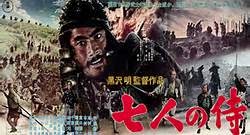
DVD Review: Seven Samurai


Back in the late '60s and '70s, my father used to take me regularly to our local cinema, where we saw the likes of 'Fear Is The Key'and 'Puppet On A Chain' amongst many others. One film in particular stayed with me for years afterwards: John Sturgess' 'The Magnificent Seven'. Little did I know that a Japanese film existed that inspired Sturgess' movie. Years later, I encountered the work of a filmmaker named Akira Kurosawa, and came to understand the influence of 'Seven Samurai', not just with regard to 'The Magnificent Seven' but also to a wide range of other films.


'Seven Samurai' is set in 16th century Japan, where a group of villagers rely on the annual crop for food and sustenance. Unfortunately, bandits have previously launched raids on the village, taking the one thing that ensures continued survival. Now, the harvest is imminent once again, and the prospect of losing their food supply sparks fierce debate amongst the frightened people. Defending the village themselves is not an option - "We're farmers, not soldiers" - so a decision is eventually made to enlist the services of Samurai who they hope will work for food as payment. For the villagers, Samurai warriors are seen in a fearful light; something to be wary of, and not ideal people to pitch camp in a community that includes women. But, initial objections are defeated and seven Samurai eventually agree to end their period of temporary unemployment and join forces with the villagers, some of whom are willing to be trained for a limited form of combat. It's here that one of this film's many strengths comes to the fore, as bonds are formed and a team is built to defend the village with courage and all the strengths and weaknesses of mortal man emerging. Fortitude, humour and romance all inhabit this 207 minute film, where the tension of waiting for the enemy to arrive can be cut with a knife.
"When everything seems tranquil, that's the most dangerous time of all" declares one of the brave warriors, launching us into a phase where the future of the village and its people will depend on battle plans and the skill and tenacity of front line troops. The fight scenes are beautifully staged, and when the final mud-splattered battle begins amidst driving rain, the bravery and fascinating tactical battle lead us to a finale that, whatever the ooutcome, the guns-for-hire can never truly win.


2014 marks the 60th anniversary of this classic, and The BFI have put together a limited edition Blu-ray steelbook, and a DVD re-issue, also re-mastered in high definition.


Picture quality on the DVD is more than acceptable, with a cleaner print than previously existed, over here at least.
The film can be played with or without the original intermission, and the BFI have included the original theatrical trailer. On the extras front, Asian cinema expert Tony Rayns talks for 47 fascinating minutes about Kurosawa's life and career, discussing the director's formative years; the breakthrough of 'Rashomon' at the Venice Film Festival and how it transformed both Kurosawa's career and the Japanese film industry. Tony also recalls a BBC screening of 'Seven Samurai'- in the days when we only had two TV channels - as part of a world cinema season and a fallow ten year period where Kurosawa bounced back with international support. Tony actually met Kurosawa on one occasion and talks about the impressions he got, together with the story of Kurosawa having dinner with Beat Takeshi. It's a greatly informative talk, and is joined here by a BFI booklet which contains essays from Philip Kemp and Gavin Lambert. Gavin provides a beautifully written review of the film, while Philip's essay puts the film in its historical perspective, explaining Kurosawa himself was descended from a Samurai clan, and going on to discuss how Toho studio tried to persuade Kurosawa to shorten the film, and also highlights the filming techniques employed on the eleven month shoot.
Philip also contributes essays on Kurosawa who passed away in 1998, and Toshira Mifune, who died a year before his director, and gave a wonderfully physical performance here as Kikuchiyo.

'Seven Samurai' will be released by The BFI on 17th April.

Tuesday, 1 April 2014

Blu-ray Review: Blind Woman's Curse


Until around 10 years ago, Japanese director Teruo Ishii was regarded as a hack, but I'd strike a comparison between Ishii and Spanish maestro Jesus Franco; both of whom had an impressive strike rate when it comes to the sheer volume of releases, and a willingness to explore a wide range of genres.


'Blind Woman's Curse' was made in 1970, and was a studio film for the Nikkatsu studio. Interestingly, it's one of only two horror films they made and here, the men in suits ordered Ishii to incorporate supernatural elements. So, the film became a 'Bakeneko'; a sub-genre which features ghost cats. In this particular case, the spirit of the feline licks the blood of a Yakuza gangleader's sister who is slashed across the eyes by the sword of Akemi (Meiko Kaji); member of a rival gang who will spend three years in jail. Upon release, Akemi is head of the clan, having replaced her late father in the Tachibana gang, but soon faces warfare with the Aozora gang who are intent in taking new territory.
Akemi is served by a team of Yakuza girls whose back tattoos form a dragon when assembled in line for conflict, but the presence of a beautiful blind swordswoman and a demented hunchback (Tatsumi Hijikata) result in a string of dead bodies, each with their tattoo carved off and bearing a note declaring the slayings will continue.

Ishii himself has described this film as nonsensical and, in places, that's a pretty fair description. However, taken overall, 'Blind Woman's Curse' emerges as a thoroughly entertaining piece, with a multitude of stand-out scenes: check out the fairground tent that plays host to a collection of wax heads - one of which is most definitely alive - a device later employed by Mario Bava in 'Baron Blood' (1972), and there are several beautifully choreographed fight scenes where blood is sprayed in a delightfully liberal fashion. 'Blind Woman's Curse' fully justifies its place amongst Arrow's consistently impressive catalogue of releases; not least, as it's a chance to savour Meiko Kaji in all her glory. While its true that Kaji is sidelined for a fair amount of the film, her screen time makes up for this and it doesn't unduly matter, given the breakneck pace and mischievous directorial flourishes that take centre stage.
I've mentioned Kaji who has great screen presence, but Choki Tokuda also scores highly as the blind swordswoman from the Goda gang whose charcter takes an almost hypnotic hold on the senses as she turns up as an angel of death at various points in the film.


Arrow Video's Blu-ray contains a transfer that compliments the garish colours that are often on display, with a high level of detail, strong black levels and also a softness in certain scenes that is clearly faithful to the original.

Trailers for the main feature and 4 trailers for the soon-come 'Stray Cat Rock' series of films are also included, together with an excellent commentary track from Jasper Sharp, writer and also co-founder of the Midnight Eye' website. Jasper is a wonderfully informed expert on Japanese films and here delivers concise information on the cast, production details, as well as the lowdown on Nikkatsu studios and other film companies of note.
Arrow have once again included a booklet with this release, containing photos and an absorbing essay from Japanese film expert Tom Mes which discusses both the film and its director who is known as 'The King Of Cult'

'Blind Woman's Curse' is out now, and is locked to Region B.