Friday, 2 June 2017

Blu-ray Review: The Bird With The Crystal Plumage (Arrow Video 2017)


Shot in 1969 and released the following year, Dario Argento's debut feature inspired filmmakers to don black gloves, sharpen their knives and enter the bloody arena of giallo cinema.
The late, great Mario Bava had already kicked things off almost a decade earlier with "The Girl Who Knew Too Much", but it was "The Bird With The Crystal Plumage" that really kickstarted this movement.
Here, Tony Musante plays Sam Dalmas, an American writer who arrived in Rome 2 years earlier, in search of tranquility and inspiration.
After exhausting the sights of this wonderful city, Dalmas signs off a book on the preservation of rare birds - anticipating an important discovery later in the film - written purely for commercial gain, rather than a burning interest in the subject matter.
Dalmas is walking back to his apartment one night when he witnesses a beautiful woman who appears to be stabbed by a black clad figure inside an art allery.
Dalmas finds himself trapped between two glass doors, and when the police arrive, the assailant has taken flight, leaving the victim with a serious but not life-threatening wound.
Sam is interviewed by the police, who link this assault to a trio of slayings that have terrified the city's inhabitants and has his passport confiscated in the hope he will be of further assistance. After going through events several times, Sam is troubled by an incomplete vision of exactly what happened. Something doesn't quite make sense, and the question of what we see and what we think we see would become a recurring theme in Argento's cinema.

Although "The Bird With The Crystal Plumage" was not well received at the start of its life, the film went on to garner acclaim from audiences and critics and is, I believe, top-tier Argento.
With a score from Ennio Morricone that sets the scene beautifully, weaving the upbeat with the eerie, and inspired camerawork by Vittorio Storaro, "The Bird With The Crystal Plumage" offers a delicious twist-and-turn plot, several exciting set pieces and a cast reacting well to a screenplay that's both gripping and punctuated with humour.
Musante excels, leaving his mark as one of Argento's best leads, his performance unaffected by the various tensions that were present between actor and director.
Enrico Maria Salermo makes for an engaging police inspector; Eva Renzi and Suzy Kendall handle their duties with aplomb, and watch out for two contrasting quickies: a gripping sequence involving Reggie Nalder, and a memorable meeting with Gildo Di Marco's pimp who makes us laugh with his 'So Long' character.
It's a wholly entertaining ride, shocking in places and thought provoking always.
Those of you unfamiliar with Argento's work will find this an excellent starting point, while 'old timers' will once again relish this landmark film.

My first encounter with this film came via a Betamax videotape, released, I think, on the Stablecane label, and cost me the princely sum of £40.
Arrow Video's release unleashes a 4K restoration from the camera negative in its original 2.35:1 aspect ratio, that boasts exquisite detail.
The supplementary material begins with "Black Gloves and Screaming Mimis" (31m 54s).
This is an excellent video essay from film critic Kat Ellinger, who manages to pack in a wealth of material. Kat explores Frederic Brown's novel "The Screaming Mimi", offering a detailed breakdown of book vs film, and covers the 1958 film "The Screaming Mimi" starring Anita Ekberg.
Impotency and gender are also covered in an enlightening essay that's beautifully delivered.

"The Power of Perception" (20m 57s)
This features the thoughts of Alexandra Heller-Nicholas, who reflects on the role of art and the theme of perception in Argento's films.
"Four Flies On Grey Velvet", "Tenebrae" and "Phenomena" - a key example of heightened perception - are just a few of the films covered, together with "The Stendhal Syndrome" which Alexandra labels his last great film. Once again, it's a stimulating essay, underlining the many comlex themes at paly in Argento's work.

"Crystal Nightmare" (31m 24s)
This is a new interview with Dario Argento, shot in 2017.
Dario talks about how Plumage was written after a trip to Tunisia, and explains why he was almost fired during the shoot.
We get plenty of background info regarding the making of this film, including the lowdown on the director's experiences with Tony Musante, together with memories of working with Morricone, Storaro and Reggie Nalder. We also learn about which city held the key to Argento's future career. Fans will enjoy this recent interview with the great man.

"An Argento icon" (22m 5s)
Here, actor Gildo Di Marco recalls his role of 'So Long' (Garullo, the pimp), explaining how he got into acting and of Argento's way of working with actors.
We are also privy to his memories of Musante and Storaro and his amazement that people ask him for interviews.
It's a joy to witness this humble man discuss his own involvement in a film that still delights almost 5 decades on.

"Eva's Talking" (11m 19s)
This is an interview with Eva Renzi, recorded in 2005. Eva talks about her career (including "Funeral In Berlin"); Klaus Kinski and Tony Musante also crop up in conversation and she's not shy on holding forth about what she really feels about Plumage and the effect she thinks it had on her career.

Last, but by no means least, we have an audio commentary track from author Troy Howorth.
Troy delves into Argento's background; enthuses over Musante's performance; talks about "The Screaming Mimi " book; Krimi films; how "The Bird With The Crystal Plumage evolved and still finds time to cover Reggie Nalder's involvement (who apparently passed on a role in one of Argento's most famous films) and Argento's fallout with Morricone.
It's an excellent commentary, beautifully delivered with a fair amount of humorous asides that reflect the playful moments in the film.
Arrow also includes a trio of trailers: Italian (3m 11s), International (2m 48s) and Texas Frightmare 2017 (55s).

The final extra comes in the form of a 60-page booklet (which I haven't seen), illustrated by Matthew Griffin, featuring an appreciation of the film by Michael Mackenzie, and new writing by Howard Hughes and Jack Seabrook.
This is a compulsory purchase for Argento buffs, and highly recommended for newbies curious to see what all the fuss is about.
"The Bird With The Crystal Plumage" will be released on 26th June


Monday, 20 March 2017

DVD Review: S&M: Les Sadiques

With a wintry Berlin as its backdrop, Alex Bakshaev's "S&M:Les Sadiques" offers a heartfelt tribute to the late Jess Franco while making its own mark in the cinema of unease.
Here, in the heartland of David Bowie's greatest triumphs (look out for the shrine), trans peed along tracks headed to nowhere; the lost and the lonely nurse drinks in seedy
bars, and a young woman searches for bed and board in a city where everything has its price.

College dropout Marie (Nadine Pape) soon discovers that if the streets are mean, bricks and mortar can hose even more hazards as she narrowly avoids rape,
ending up in the abode of a woman who "takes orders from no-one.
Sandra (Sandra Bourdonecc) soon introduces her latest charge to a world where pain and pleasure co-exist; a lifestyle that leads to betrayal and murder.

With nods to "Succubus", "Venus In Furs" and "She Killed In Ecstasy", "S&M" also draws on the poetic elements of Jean Rollin, where snow covered streets replace beaches,
leaving short-lived footprints that will soon fade forever.
The film is accompanied by an evocative soundtrack from Kevin Kopacka and Alexander Zhemchuzhnikov ( Stuart Lindsay performing the music of Daniel White at various points), and brought to life by exquisite photography, capturing the magic and the harsh realities of the location.

Cast-wise, there are two stimulating performances from the female leads, ably supported by Kevin Kopacka (Marie's lover), Harry Baer as her Uncle Franz and Nikolaus Sternfeld as Tom.
Thanks to the script by Alex Bakshaev and Sarnt Utamachote, there's plenty to stretch performers and viewers alike, installing this as a film that will most certainly repay multiple viewings.

It's extremely bloody in places, with jealousy and betrayal leading to a reprehensible act that will surely make your blood run cold.
There are also moments of tenderness and togetherness, recalling happier times when the world seemed less oppressive.
"S&M: Les Sadiques" scores highly in all the key areas and carries my recommendation as a perversion story with a heart and soul.


Image quality on the DVD is pin-sharp, highlighting the beautifully lit interior and exterior scenes. There are also 3 trailers. One for the main feature,
and for two other enticing titles: "Dylan" and "The Devil Of Kreuzberg".

Wednesday, 15 February 2017

Blu-ray Review: The Crying Game (BFI dual format)


In the world of cinema, different markets often deliver polar opposite responses. In the US, Neil Jordan's "The Crying Game" was greeted with open arms by audiences fascinated by the film's sexual politics.
In the UK, the spectre of the IRA - very much active in England at the time - turned off cinema goers who were unwilling to accept that a member of this organisation could possess a human side.


A carnival in Northern Ireland is the setting for the kidnapping of Jody (Forest Whitaker); a soldier who is ensnared by the gorgeous Jude (Miranda Richardson) and taken at gunpoint to a safe house near Newry, some 34 miles from Belfast.
One of the senior members of the IRA is being interrogated at Castlereagh, and Jody is informed that he'll be shot unless their comrade is released within 3 days.
Slowly, Jody's personality and situation infiltrates the very soul of Fergus Hennessey (Stephen Rea); a footsoldier for the IRA, who reveals that behind the political brainwashing lies a man capable of forging friendships across the great divide.
When the inevitable occurs, Fergus has cultivated a bond with Jude, resulting in a journey to London where Dil (Jaye Davidson) works in a hairdressers, awaiting Jodie's return.


"The Crying Game" is a film of secrets deceptions and identity, with a twist halfway through through that's beautifully timed, and which leads to some incredibly moving scenes.
Rea is particularly fine here, succeeding in a supremely difficult task of getting the audience on his side, moving from potential cold-blooded executioner to a person who can laugh, love and feel for fellow human beings. Praise too, for the excellent supporting cast, including Richardson's thoroughly evil agent who eventually turns up in London, reminding Fergus that "You're never out!", having established her cruel nature at an early stage: "Don't leave me with her!" implores a frightened Jody and that's before he takes a heavy blow to the face from the butt of her gun!
Jim Broadbent's go-between barkeep Colin; an affecting turn from Whitaker; Adrian Dunbar's fiery IRA hitman and a quite brilliant performance from Davidson make this a film to enthrall from start to finish.
While it's true there is one scene in particular that requires huge suspension of disbelief, the film overall succeeds as a love story punctuated by the blood and bullets of a dark period in our history.


"The Crying Game" may not have set the box office alight over here, but it's not been forgotten and the release of this dual-format BFI Blu-ray and DVD will delight old admirers and recruit a new generation of film buffs.
The Blu-ray presentation offers solid colours, deep blacks and no anomalies. A rich viewing experience.
The supplementary material commences with a director's audio commentary track. Neil Jordan talks about cinematic influences; casting choices; why he shot in cinemascope; the research undertaken for Jaye Davidson's character and also acknowledges the tip of the hat to "Mr Arkadin."
Jordan also talks about shooting with a minimal budget: a state of affairs amplified in "The Making of The Crying Game" (50m 24s).
Here, the director is joined by Stephen Woolley, Stephen Rea, Janes Giles and Nik Powell; the latter providing further insight with regard to the low budget.
We also hear about Channel Four's main two objections to the script; how the finance was raised and why this film was very much make or break for Neil Jordan.

An alternative ending (with optional director's commentary) is presented for the first time, taken from VHS tape and running for 4m 55s.
Channel Four insisted on an alternative ending being shot, and finally agreed with Jordan that his original ending was better and could be filmed.
I'd say this was the right decision, although the inclusion of the alternative - shot in snowy London streets - is worth seeing.
"Northern Troubles" (8m 50s) Here, a Catholic and a Protestant take separate journeys through Belfast, sharing their respective views on the politics in their world.
The package is rounded off with 2 trailers. The 1st runs for 1m 37s, while the second (53s) is a series of review quotes under the film poster.
The BFI have also compiled a booklet featuring excellent essays by Ashley Clark and Juliet Jacques, and a valuable Neil Jordan overview from Brian Hoyle. Excellent writing from all three participants and worthy of your time.

"The Crying Game" will be released on 20th February.

Monday, 31 October 2016

Blu-ray Review: Assault On Precinct 13 (Second Sight)


My first encounter with John Carpenter's "Assault On Precinct 13" occurred during a golden age of cinema double bills in the 1970s.
In those days, film buffs had the opportunity to catch the likes of Lucio Fulci's "The Beyond" / "House By The Cemetery", "The Exorcist" / "Exorcist II" and "Jason And The Argonauts" / "Chariots Of The Gods". Assault turned up on a double header with "Halloween" and quickly convinced me that Carpenter was a director who merited special attention from that point on.
Certainly, Assault still comes over today as a job well done, being an intoxicating old school mix of "Rio Bravo" and "Night Of The Living Dead" as heroes and heroines emerge from a retired police station under siege from a LA gang.


After a bloody shootout between police and gang members, we join Lieutenant Bishop (Austin Stoker) who is on the way to oversee the closure of the Anderson precinct police station. Here, the cells are empty and the electricity supply is due to be bumped before the 4.00am shutdown as Leigh (Laurie Zimmer) and Julie (Nancy Loomis) carry on winding down their duties. On the other side of town, shackled prisoner 'Napoleon' Wilson (Darwin Joston) is heading for Death Row under armed supervision while members of the LA Thunder - still smarting from the deaths of 6 members - commit an unbelievable atrocity which culminates in a shell-shocked man stumbling into Anderson station having killed the gang's leader.
Wilson also ends up at the station , but it's really the grieving stranger who is the subject of the gang's attention, prompting the delivery of a chilling blood oath declaring they are willing to lose more gang members until revenge is taken.
So begins a long, dark night of the soul with the hoodlums silencers greatly adding to the eerie atmosphere and ensuring no-one can hear their shots.


Carpenter's taut direction and entirely memorable score - one of his very best - creates a nightmarish scenario which the cast respond to admirably. We have Julie, desperate to turn over a man whose world (unknown to them) has already ended, while Bishop and Wilson gradually build mutual respect in the fight to stay alive. Best of all may be the gorgeous Laurie Zimmer, who comes over as an enormously resourceful woman in the face of true adversity.
2016 marks the 40th anniversary of this film, which remains the crowd-pleasing gem it was all those years ago. The infamous scene that drew gasps of disbelief at the screening I attended has retained its power to shock to the core, and there are many other scenes that stay with you long after the credits have rolled: witness the scene where stray bullets disturb a wall clock from its previously serene resting place, demonstrating time no longer has any meaning in this night without end.


Second Sight's Blu-ray presentation adds fine detail, solid colours and even a greater sense of purpose to this classic, and goes on to deliver some meaty extras for those of us who love to really step inside a film.
First up is a John Carpenter commentary track where the director talks about the challenges he faced with a $100,000 budget. John discusses the critical reception; admits there are a few scenes he wouldn't have got away with today; chats about cast and crew and pronounces that Assault was unique for its time.

Art director and sound effects designer Tommy Lee Wallace is joined by Michael Felsher for a second commentary track which takes in Tommy's high school days with JC; the panavision filmmaking process; that shocking murder scene and his own work as a director.

Return To Precinct 13: An Interview With Austin Stoker (9m 20s)
Austin recalls his early movie-going experiences; how he first met JC, and the big responsibility of being the main character.

Filmmaking With John: An Interview With Tommy Lee Wallace (21m 41s)
Tommy recalls his high school band days with JC; talks about the magic of 35mm film and of his relationship with John, calling him extremely well prepared and motivated.

Producing Precinct 13: Interview With Executive Producer Joseph Kaufman (15m 39s)
Here, Joseph brushes aside the $100,000 budget claims; chats about John's time at USC and digs into Assault's production history.

Captain Voyeur (8m 27s)
Made in 1969 at Southern California's School of Cinematic Arts, "Captain Voyeur" is a John Carpenter student film, recently re-discovered by school archivist Dino Everett in 2011. This creepy little number could be loosely referenced to Carpenter's "Halloween", employing a masked figure on the loose in back gardens and alleyways where a light in a window is the signal for our peeping tom to strike.

Do You Remember Laurie Zimmer? (53m 41s


In 1977, Charlotte Szlovak wanted to make a film that would really translate the city of LA, with a woman at the centre of the story.
Charlotte chose Laurie Zimmer who played an actress driving round the city in search of a indefinable something to spark her life.
After filming was completed, Charlotte lost touch with her newfound friend, and this compelling short tells the story of her journey to find Laurie. It's a haunting tale for sure, as Charlotte delivers poetic narration while negotiating blond alleys and dead ends during her search for the actress. It's an uplifting story, demosntarting that a strong bond can never truly be broken.

Interview With John Carpenter and Austin Stoker (23m 8s)
This was filmed before an appreciative audience at the Egyptian Theatre in 2002, where JC and Austin discuss how Austin got the role of Bishop and other cast choices. "They Live" and "Dark Star" are just two of the films that come up during a lively Q&A with the audience.

The Sassy One With Actor Nancy Loomis (12m 44s)
Nancy recalls her formative years at high school and USC; tells how she handled nerves during her first couple of features; talks about "Halloween" and "The Fog" and touches on her opinion of fan conventions.
The extras conclude with a 2m 3s theatrical trailer and 1m 4s worth of radio spots. Fans will also be delighted by the inclusion of a bonus CD soundtrack disc exclusive to the box set and 5 exclusive art cards.
"Assault On Precinct 13" will be released on 28th November in the UK, and is an essential purchase for all fans of John Carpenter.

Thursday, 13 October 2016

Blu-ray Review: Paris Blues (BFI)


Set in an Autumnal Paris, Martin Ritt's 1961 film throws together a quartet of Americans. Two of them - Ram Bowen (Paul Newman) and Eddie Cook (Sidney Poitier) - are jazz musicians drunk on the artistic spirit of the city, and also the freedom it provides.
Lillian (Joanne Woodward) and Connie (Diahann Carroll) are tourists, arriving for a two week stay with the aim of taking in all the popular haunts in this city of lovers.


The arrival of jazz legend Wild Man Moore (Louis Armstrong) sends the local community into a frenzy; many of whom hang out a Marie Seoul's jazz cave where Ram and Eddie play.
After a false start which suggested Ram and Connie could well develop a certain chemistry, Ram takes up with Lillian, leaving Eddie to fall for Connie.
As jealousy and the plight of a talented musician and friend simmer and pop in the background, both men are forced to choose between their potentially rewarding careers and the chance to find real love with adoring partners.


"Paris Blues" is beautifully paced throughout, moving from the exhilarating jam sessions and backroom bust-ups to quiet, reflective moments which involve the most painful soul -
searching.
We have Ram showing his drug-addicted buddy a mirror image of what he'll become if he doesn't quit the coke; Eddie, fearful of exposing himself to the racism back home, and there's a fateful encounter between Ram and a music promoter who must decide whether Ram's compositions represent a seriously accomplished piece of work.
Add to this the two smitten females who are convinced their partners are a once-in-a-lifetime find, and you'll see there's a multitude of emotions to take in, all of them conveyed by a first rate cast while the superb soundtrack plays on.
Wild Man's comment to Ram that "They tell me I have to blow real hard to put you down" is entirely correct, and both men participate in an almighty session, blowin' fit to burst, with not a hint of one upmanship. Just the joy of playing, and being a part of great things.The venue, too, is a delight as jazz aficionado's sit at tables with candles perched in wine bottles, living every note as the music flies up the stairs and out into the magical Parisian night air.
"Paris Blues" captures the atmosphere of these venues, but also explores the fallout from musical infatuation and genuine fears about the specter of racism that haunts many who left their countries for something better. It's an absorbing study of how lives can change so quickly and why we sometimes do things for the wrong reasons.


This BFI release is part of their Black Star season, dedicated to the power and versatility of black actors.
"Paris Blues" certainly looks splendid in HD, with exquisite detail. Duke Ellington's Oscar-nominated score can be enjoyed to the full on an isolated music and effects track.

Adrian Martin is fast becoming my favourite when it comes to the audio commentary department, so I was pleased to discover he takes the microphone here to deliver an informative talk.
Adrian goes into the wealth of information and detail in various scenes; talks about method actors and character psychology; brings "One Eyed Jacks", Brando and John Cassavetes into the equation, and discusses the mixture of studio and location shots. Adrian acknowledges "Paris Blues" was not a highly regarded film at the time, but makes a solid case as to why it offers real value.

The BFI also includes a stills gallery, comprising of b/w and colour stills, plus film posters and there's also a 2m 49s trailer.
You'll also find a booklet in this dual format release, which includes essays from Nicolas Pillai and Rashida K. Braggs, together with Philip Kemp's look at the career of
Martin Ritt.

"Paris Blues" will be available to buy from 24th October. Highly recommended!

Sunday, 28 August 2016

A Warm Welcome to Indicator: An Exciting New British Label

Indicator is a new British Blu-ray and DVD label, owned and operated by Powerhouse Films, London.
Indicator promise a comprehensive range of classic films, expertly encoded and supported by a generous range of supplementary material.
These dual format releases will be accompanied by booklets featuring newly commissioned essays, together with contemporary articles, features and reviews.
New and improved English subtitles for the deaf and hard-of-hearing will also be a feature of Indicator releases.

Launching on 24th October, the first titles will be John Carpenter's "Christine" and Brian De Palma's "Body Double".


INDICATOR LIMITED EDITION SPECIAL FEATURES
• Original stereo audio
• Alternative 5.1 surround sound track
• Audio commentary with director John Carpenter and actor Keith Gordon
• Christine: Ignition, Fast and Furious & Finish Line (2003, 48 mins): three-part ‘making of’ documentary, featuring interviews with cast and crew, including John Carpenter and Keith Gordon
• Deleted scenes (26 mins): twenty-one sequences which never made the final cut
• Isolated score: experience John Carpenter’s original soundtrack music
• Image gallery: on-set and promotional photography
• Original theatrical trailer
• New and improved English subtitles for the deaf and hard-of-hearing
• Limited edition exclusive 24-page booklet with a new essay by Jeff Billington and a 1996 article on Carpenter’s cinematic ‘guilty pleasures’
• Limited Dual Format Edition of 5,000 copies
• UK Blu-ray premiere


INDICATOR LIMITED EDITION SPECIAL FEATURES
• Original stereo audio
• Alternative 5.1 surround sound track
• Craig Wasson Interview (1984, 10 mins): archival NBC interview conducted by Bobbie Wygant
• Pure Cinema (38 mins): extensive interview with first assistant director Joe Napolitano
• The Seduction (17 mins): De Palma discusses the first treatment of the script
• The Setup (17 mins): an examination of the plot
• The Mystery (12 mins): Melanie Griffith discusses her nude scenes and De Palma's shyness
• The Controversy (6 mins): cast and crew discuss the film's critical reception
• Isolated score: experience Pino Donaggio’s original soundtrack music
• Image gallery: on-set and promotional photography
• Original theatrical trailer
• New and improved English subtitles for the deaf and hard-of-hearing
• Limited edition exclusive 40-page booklet with a new essay by Ashley Clark and archival reprints, including a lengthy 1985 interview with De Palma
• Limited Dual Format Edition of 5,000 copies
• UK Blu-ray premiere

Here's a rundown of the first batch of releases:

001 - CHRISTINE (John Carpenter, 1983)
002 - BODY DOUBLE (Brian De Palma, 1984)
003 - GUESS WHO'S COMING TO DINNER (Stanley Kramer, 1967)
004 - TO SIR, WITH LOVE (James Clavell, 1967)
005 - 10 RILLINGTON PLACE (Richard Fleischer, 1971)
006 - HAPPY BIRTHDAY TO ME (J. Lee Thompson, 1981)
007 - THE LADY FROM SHANGHAI (Orson Welles, 1947)
008 - BUNNY LAKE IS MISSING (Otto Preminger, 1965)
009 - FAT CITY (John Huston, 1972)
010 - THE LAST DETAIL (Hal Ashby, 1973)
011 - EXPERIMENT IN TERROR (Blake Edwards, 1962)
012 - THE ANDERSON TAPES (Sidney Lumet, 1971)

I hope you will join me in supporting this enterprising new label. A mouth-watering selection of titles for sure.

Saturday, 27 August 2016

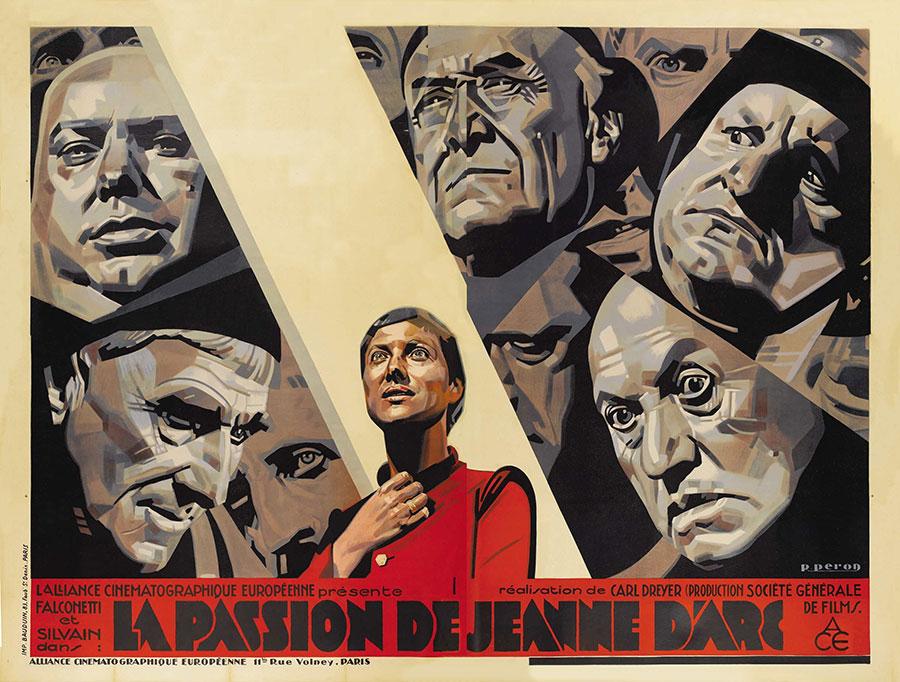
The Passion Of Joan of Arc: A Very Special Night


27th August, 1995. The second collaboration between London's National Film Theatre and New Musical Express magazine presented a series of films linking music with the moving image. 'Screenage Kicks' featured some of the best music-related films, and notable performers and broadcasters were invited to introduce movies that had inspired them. John Peel, Jarvis Cocker (Pulp), Andrew Oldham and Martin Carr (The Boo Radleys) were just a few of the celebrities involved as "Withnail And I", "Kes","Sweet Smell of Success", and "Midnight Run"rubbed shoulders with classic footage from the likes of Bob Dylan, Neil Young and The Who.

As far as I was concerned, the most intriguing event looked to be a one-off screening of Karl Dreyer's "The Passion of Joan of Arc", with live musical backing from Nick Cave And The Dirty Three. So, the evening of August 27th saw me arrive at the NFT with high expectations. I wasn't in the least surprised to discover that NFT1 was completely sold out, and the large number of folks vying for a handful of returned tickets contributed to an indefinable ambiance; the like of which I'd rarely encountered at the cinema. After spending half an hour in the NFT bar, it was time to take my seat for this most special event, which was introduced by Gavin Martin, editor of the NME film section. Martin explained that Nick Cave had suggested composing a score for Dreyer's silent classic; a project which had taken several months of rehearsals and careful planning. With that, Cave strode onto the stage, accompanied by Warren Ellis (violin), Mick Turner (guitar) and Jim White (drums).

"The Passion of Joan of Arc" is certainly Dreyer's finest hour, and Cave's heartfelt tribute turned it into a truly extraordinary experience; quite simply the most emotional and physically draining experience I've witnessed at the cinema. Dreyer's film is based on two novels by Joseph Delteil on the original transcript of this infamous trial. Delteil assisted Dreyer with the screenplay, but there's little doubt that the court records set the tone for this harrowing film. THE PASSION OF JOAN OF ARC is composed almost entirely of close-ups, and the final stages of the trial - along with Joan's execution - are dominated by the face of Renee ('Marie') Falconetti. The plight of the woman who claimed she was sent by God to save France is indelibly printed on Falconetti's tortured visage; indeed her performance is so intense, it seems as though she was actually possessed by the spirit of this revered Saint. As Joan is tortured and humiliated by the 'devil's agents' en route to her eventual confession, Falconetti cries what are so obviously real tears. This has to be a real contender for the most courageous performance ever given by an actress, and I was astonished to learn that this was her first and last film. Reports indicate she received help and advice from her director along every step of the way but, ultimately, Renee Falconetti must have felt more alone than any woman in silver screen history. Her overwhelming presence makes this a painful viewing experience, and Dreyer's obsessive approach to his subject matter is still guaranteed to disturb, even in an age where we think we've seen everything. Falconetti's inner strength, her unparalleled suffering and eventual despair manage to cross that often impenetrable barrier between screen and audience, forcing us to feel her pain and, occasionally recoil in horror. The scene where Joan is 'bled' so that she may live to deny her faith is extremely graphic, drawing gasps from an incredulous audience and when her execution takes place, the band stop playing and become as one with the packed auditorium who are stunned by this tragic history lesson.
Cave has gone on record as saying this is his all-time favourite film and it showed, Nick! Here, The Dirty Three offered mostly understated background support, with smoldering violin and guitar anchored down by Jim White's steady beat. Occasionally, the boys really put their feet on the pedals, responding to Dreyer's disturbing visuals with all the brutality of prime-time Bad Seeds. However, it was the quieter moments that really left a scar: Cave's beautifully fragile piano, his wordless vocals which often mutate into a haunting 'This is my desire' refrain, and his unerring ability to correctly call when the music should stop. A prime example of this came near the end of the film, when Joan is burnt at the stake. As the flames rise, a deathly silence envelopes the NFT, as we watch the crowd who gathered to witness the execution suddenly realise the enormity of this obscene act and openly revolt. It's then that Cave chooses to deliver his only song of the evening; a plaintive vocal which addresses "God's non-intervention".

All at once, the film is over, and a shell-shocked audience rise to give a standing ovation to Cave and his fellow performers. As we made our way to the exits, I noticed that some people were weeping, others were discussing the film in hushed tones, but most were just too overwhelmed to react. I think we all realised that we had witnessed something extremely special as a passion that has endured for almost 90 years reached new heights.